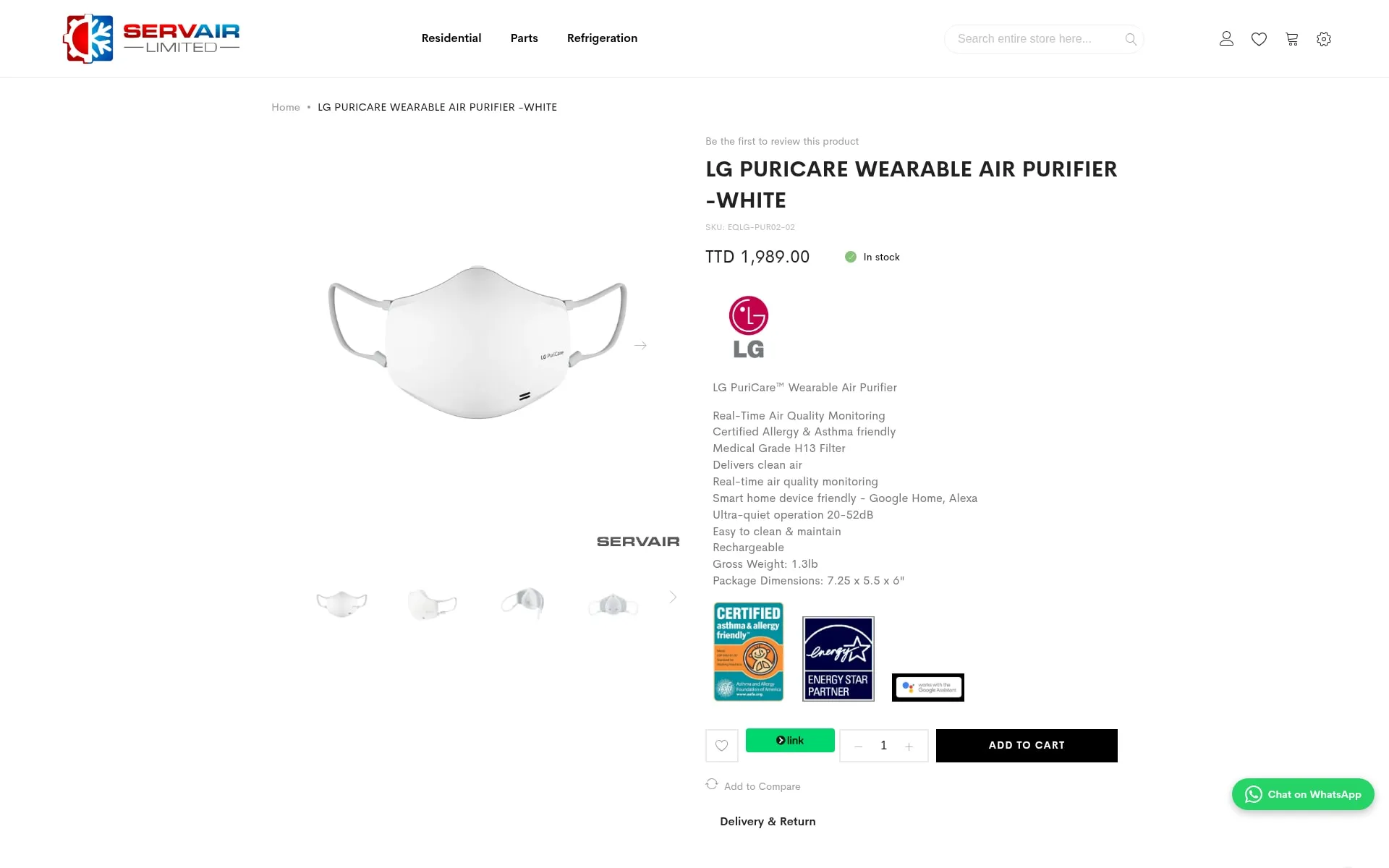
Servair.com
Trinidad & Tobago had never bought an air conditioner online. We built the store, solved the payments problem nobody else would, and sold the first unit within a month. Today the team keeps the catalogue current through their own AI assistant, and nothing changes without a person’s approval.
Servair thought they were two or three years away from selling online. They were wrong, and we were the team that showed them.
Brand first, store second
Before a single product went live we worked on identity. A new logo suited to the times, brand guidelines that would hold up under repetition, and a UX vision they could apply across every part of the business — not just the website. Getting this right first meant everything downstream had something to be consistent with.
Onboarding a thousand items
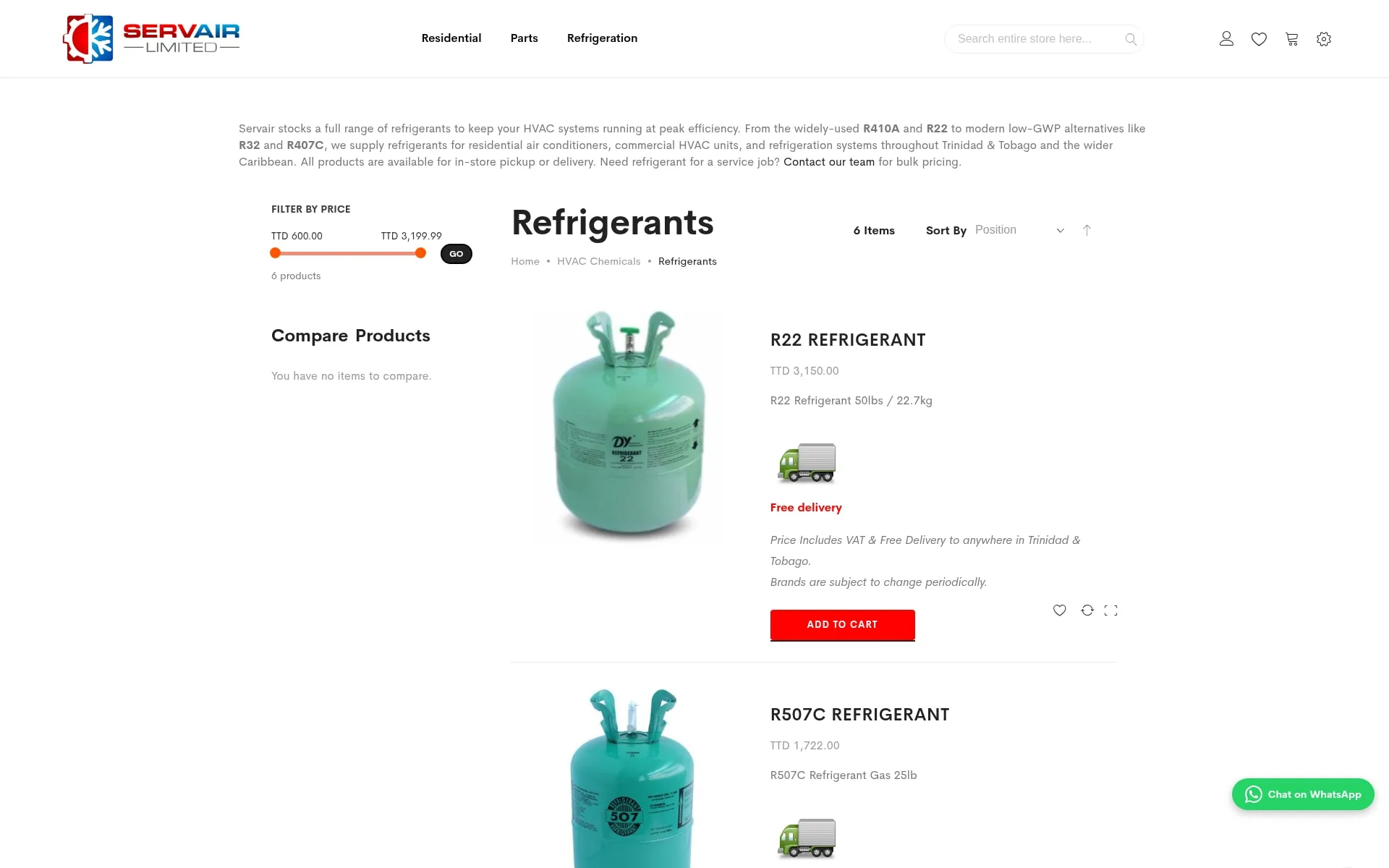
Then we stood up the platform and started moving inventory. Over a thousand items is a genuinely difficult migration, and the honest answer was prioritization rather than brute force: we sequenced the catalogue so the highest-turnover stock went live first and the long tail followed.
While the Servair team onboarded, we built the rest of the site and got their payment gateway approved.
That approval is where the project got interesting. Selling online from a developing country is harder and less fair than it should be — gateways are cautious, fees are higher, and the documentation burden is heavier. Working through it for Servair taught us a process we now offer to every international client we take on.
Within a month, Servair sold the first air conditioning unit ever bought online in Trinidad & Tobago.
Still their technology department
We still run the technology side of Servair. In September 2026 we moved the store to a new platform built for phones first, and the desktop home page’s Lighthouse performance score rose from 65 to 95.
The new site does more of the selling. A sizing calculator, built on the rule Servair’s own technicians use for tropical rooms, tells a customer which unit fits the space. Three parts diagrams, from mini splits to compressors, are now clickable, so a technician can go straight from the drawing to the part. Before each one went live, an AI reviewer briefed as a senior technician checked it.
AI that asks before it acts
Then we brought AI into the back office, starting from how the team already worked rather than from a new tool.
Servair’s team now manages the catalogue through their own AI assistant, connected to the store through a link we built. Every change is previewed, approved by a person, logged, and can be undone. In one evening in October 2026 it applied 357 stock and price updates from the accounting system’s exports.
For smaller jobs, staff post a request in plain words in a group chat, and an AI agent does the work, numbers the task and reports back. Requests have ranged from correcting a dozen sensor prices to checking every product under TT$75 and sending back the list as a spreadsheet.
Next on the list: search marketing, and selling to other Caribbean islands and South America once the customs questions are settled.
We first started out with just a website contract. Now we consider the Techlicity team our technology department.